Posts Tagged "Emotions"

Source:Family Dynamic, Psychotherapist, Lai Shun Mei

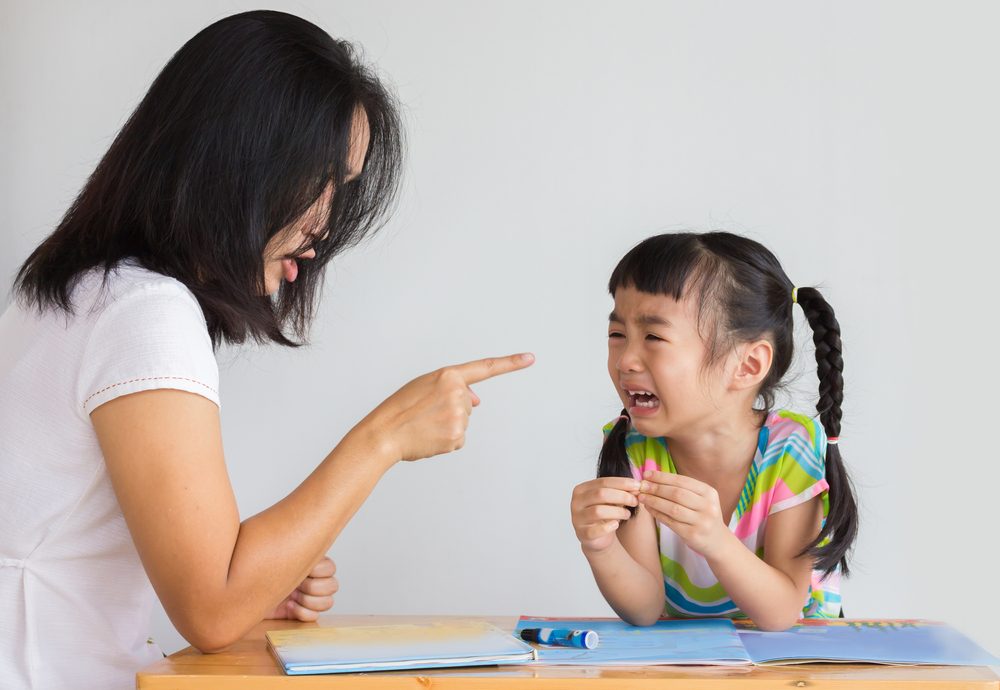
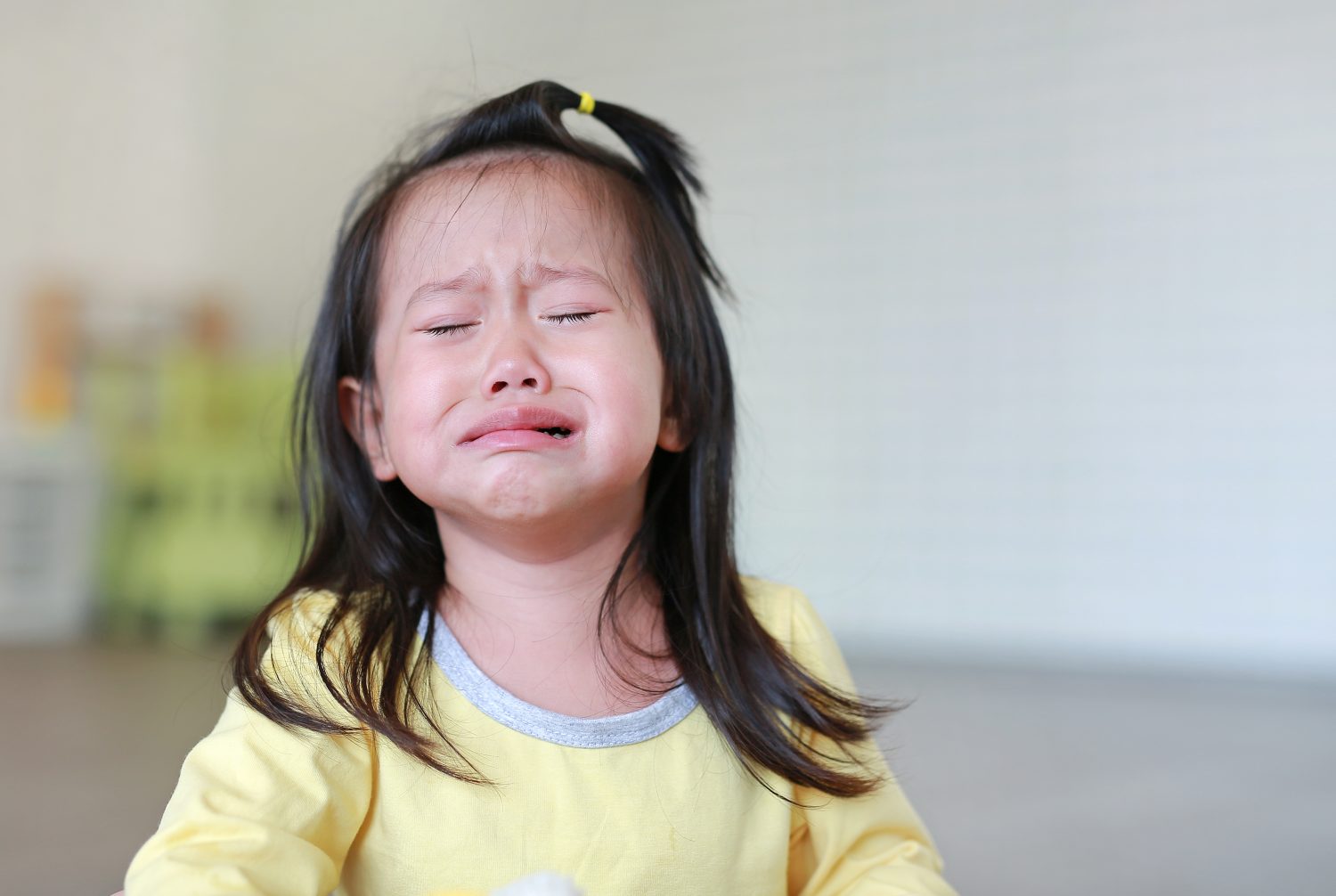
Sometimes, children may cry when they are slightly dissatisfied, and parents may have tried different methods to comfort their children, but the children still cry from time to time. This may make parents feel tired, helpless, and even annoyed. In fact, children’s crying is usually a way of expressing their emotions. Because their language is not yet developed enough to convey a complete story, their own feelings, and some thoughts, they will use the most direct or fastest way to seek help when they are unhappy, which is to cry, just like when they were infants.

Let’s not assume that just because children can walk, talk, and go to school, we need to talk to them more about reasoning. In fact, in the preschool years, parents should provide more emotional support to their children. Maslow, a well-known psychologist, came up with the five-level theory of human needs. The levels are physiological, safety, social, esteem, and self-actualization. As children’s cognitive development matures, they have already reached the third level of social needs, which is love and a sense of belonging.

At this time, they need to feel the care and love from people around them, and they begin to recognize their own emotions. Therefore, if parents can help them express their emotions and thoughts, not only will their language skills improve, but their social needs will also be met.
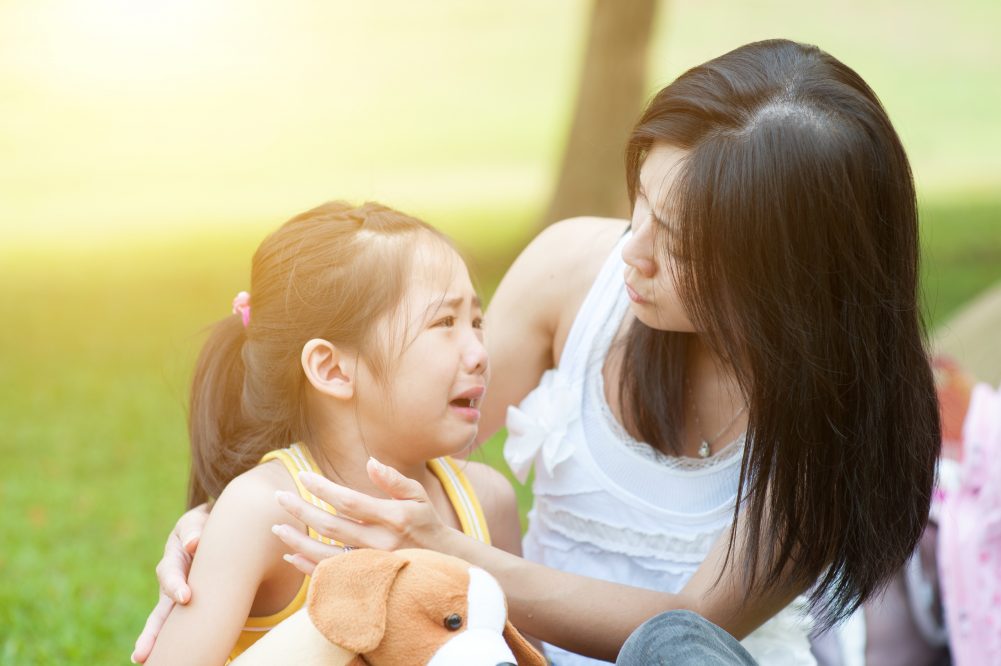
When we see a child crying, we as parents can say something like this to them: “You seem very unhappy; maybe you don’t like it when mommy talks to you in a harsh tone.” “Your little brother took your toy without asking, which made you angry.” If you can speak accurately to the child’s feelings, they will quickly nod and stop crying. Over time, they will learn to use other means to express themselves instead of crying.

Some parents may wonder why their usually talkative kids can’t say what they’re feeling when they’re sad. This is because emotions can affect rational thinking. If I asked you to give a speech on stage right now, how would you feel? You may feel nervous or even a little scared, and if I don’t give you time to prepare, you may not be able to say a word. You can see that emotions can affect adults, let alone children.

So, as parents, we should first calm down and then carefully watch and try to figure out why our kids are crying. Then, put yourself in their shoes and express your thoughts and emotions. This way, the child will not cry anymore.

Source:  Family Dynamic Psychotherapist, Yuen Wai Man

Parents’ upbringing backgrounds, education levels, or family of origin may differ in parent-child interaction, so it is quite normal for parents to have differing opinions on something.

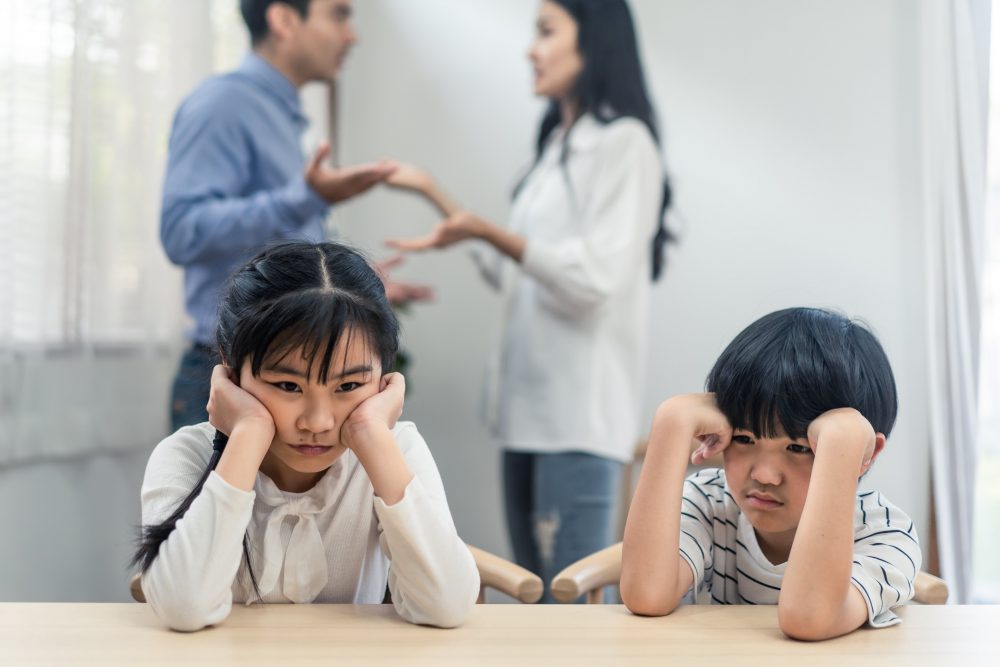
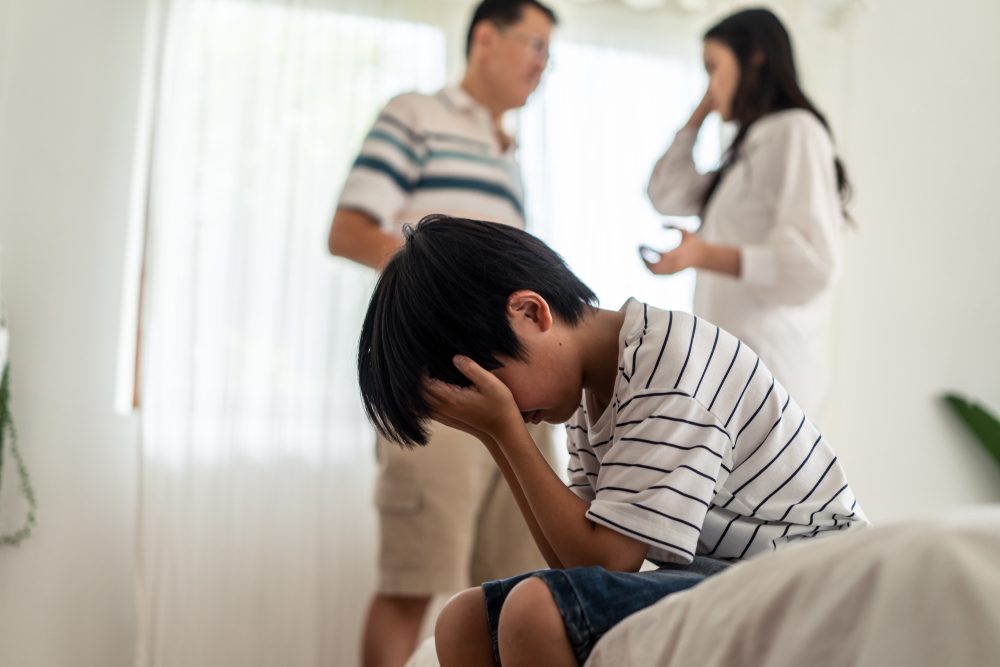
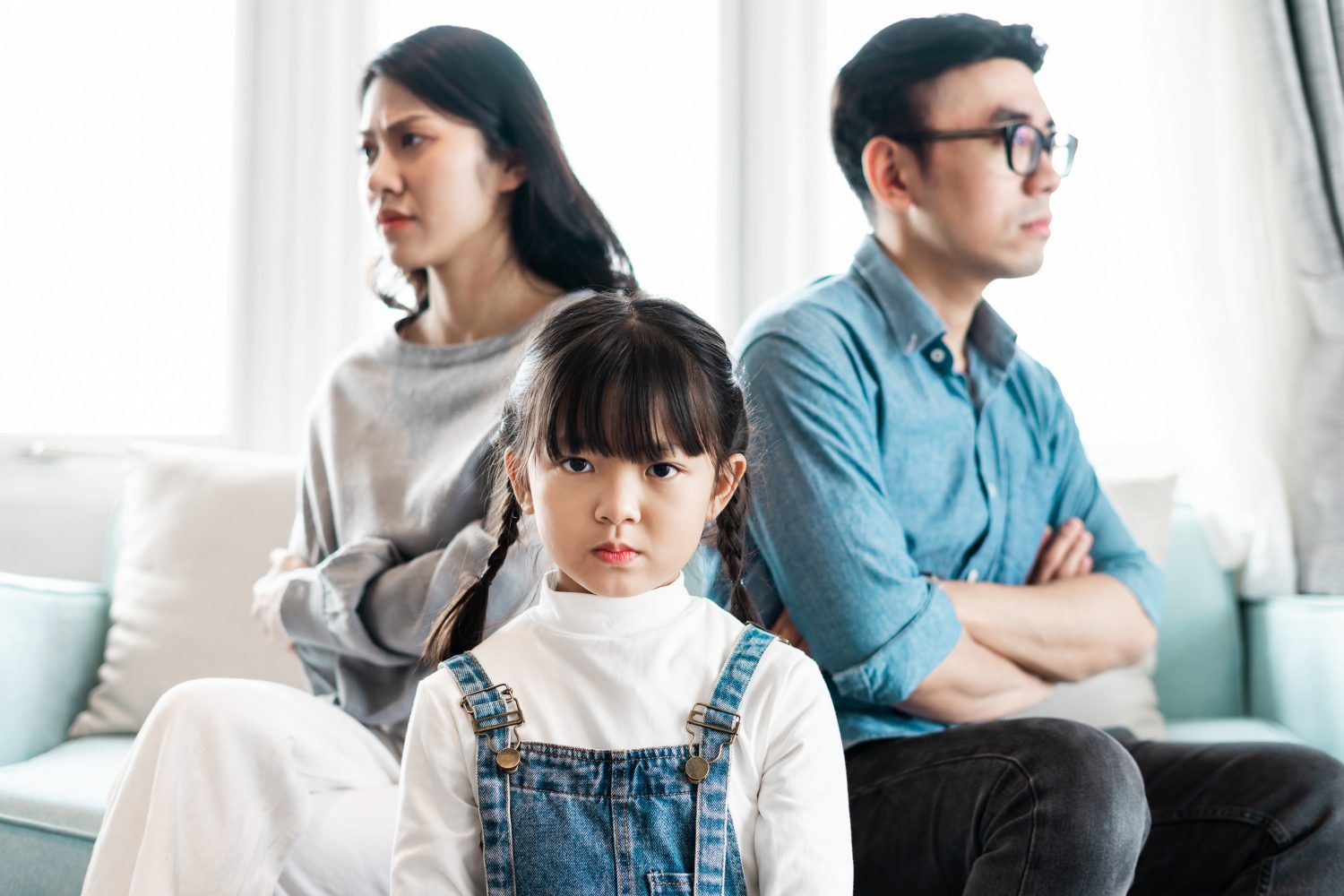
When there are indeed different opinions, parents should find a calm environment to discuss their own perspectives and views on the problem. In any situation, we don’t want parents to argue directly in front of their children. For example, Dad can explain to Mom, “When I’m unhappy or under work pressure, I use my phone to vent and reduce stress, so I don’t think it’s a problem for kids to play with phones.”

And the wife can also express this to her husband: “Actually, I hope you can support me and understand that taking care of children is also very difficult for me.” Everyone can discuss calmly and equally in a peaceful environment. In fact, in the parenting environment, parents’ steps must be consistent.

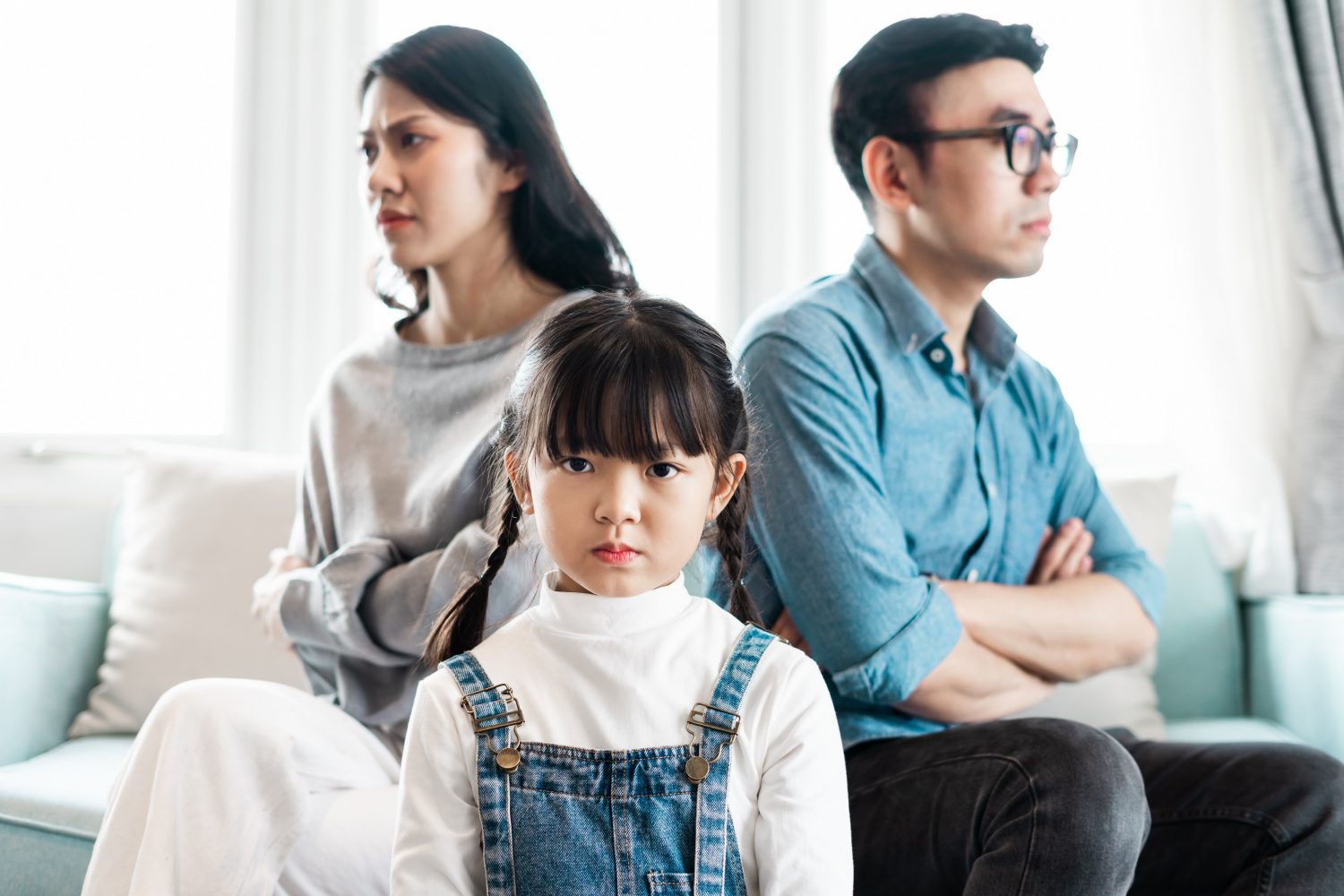
Parents, for example, are like dancing partners in parenthood. When the father steps forward, the mother should step back. When the father raises his arms, the mother should spin around. This is a natural rhythm. If they can work together effectively, not only the dancing couple but also the onlookers can enjoy the dance. But if everyone insists on their own stance without compromise, the dance will be a mess.

In the family environment, children are often the most faithful and loyal audience, always standing in the center of the hall watching how their parents dance. So if the parents dance poorly, the audience will also be restless, the atmosphere will become tense, and more problems will arise. On the dance floor, parents will also trample on each other, causing more pain.

If there is a situation where the parents cannot see eye to eye and are in a heated argument, we would suggest that one of them leaves the scene. It’s not a matter of winning or losing or saving face, but rather allowing everyone to catch their breath and take a break. In a family environment, it’s not a competition between parents because the real victim will always be the child. So when parents are in a heated argument and cannot compromise, one of them should step back, cool down, and leave the scene. This would be better for everyone involved.

Source: Parenting Specialist, Ken Sir,

Some mothers often ask me, “How should I show my love for my children?” Will it be spoiled by expressing too much? I think that Chinese people are more introverted and are often afraid to express their love. Especially when you want to express your concern for him but end up with a different attitude.

I once saw a mother and her little child lost in Shatin and then reunited. How did the mother behave after the reunion? She grabbed him by the hand and hit him while saying, “I just couldn’t see you; do you know how scared I was?” I am very worried about you. What can I do if I can’t see you?

In fact, everyone knows that his mother loves him, but the child cannot feel it. I often share an example of how to express love in my lectures. When I was a child, my father ordered a drink, and since he didn’t have much money at the time, he asked the waiter for an extra cup after ordering a hot drink. He kept pouring the drinks around in front of me, trying to get the drinks cold as soon as possible so that the kids wouldn’t burn their mouths when they drank them and they could drink them faster, but I found that if the kids asked their parents or I asked many of the student’s parents, they would all answer, “This will get cold faster.”

When responding to children, parents should express their deepest feelings, such as “Because I love you, how would I do this thing if I didn’t love you?” Do I do it for the one next to me? In fact, there are many things we can do in life to express love, but there is one thing we must remember if we are to avoid causing spoiled, you must remember the following two points.

The first point is that if a child can do something, he should be allowed to do it; you should not fight to make him do it. The second point is that when a child makes a mistake, we should correct him. In the process of correction, we should be gentle and firm, and serious when we need to becv serious. However, remind the child that he or she should be told the solution, not just no or wrong. If so, the child will not improve.

Source: Senior Parenting Expert, Bally

Many parents often ask, “Why is the child so disobedient?” “Why does he hate me so much?” or “He is ignoring me more and more.” In fact, there are four types of behaviors that, over time, will cause our children to despise themselves. Many of the parents that I have met in my day-to-day life often unconsciously say or do things that make their children hate themselves. This is what parents do not notice.

First, comparison. We frequently ask children, “Why are you like this?” “Your younger brother is not like you; he is very neat,” and “look at the students next to me; they listen to their parents. “When we often express ourselves in a “comparison” manner, children will feel disgusted when they hear their mother’s voice.

Secondly, when children do something wrong, parents often overlook the motives behind their behavior. When we find out that a child is doing something wrong, we should first understand what the child is trying to accomplish with the behavior. Do not rule out that they are trying to do something right. Maybe he wants to pour a glass of water for his parents or his brother, or he is not doing his homework well, but in fact, he is doing his best and is just mentally tired.

When he is not doing well, we can first praise his behavior by saying, “Thanks; I know you are nice and want to pour water for us, but don’t spill water again.” “It’s dangerous,” or “Don’t walk so fast.” After we praise the child, he will understand that he is doing the right thing, and then he will listen to his parent’s advice and improve.

Third, parents should pay attention to the end of the day if, in fact, they are full of negative energy and bring emotions into the home. When parents see that their children are not behaving in a satisfactory manner, they may take out their emotions on them in a series of ways. This is not fair to the child, who may have made only a few mistakes but is being blamed for a series of them.

Fourth, parents should be very careful that expressions of anger will misinform their children with inaccurate information. For example, “If you do this, you might not be my son.” When we mistakenly use such an aggressive word, it can be very harmful to the child.

Parents should never commit these four behaviors while children are growing up, or they will hate their parents from an early age.

Source: Psychotherapist, Lee Wai Tong

Whenever something happens, children will use different excuses to shirk their responsibility toward others. Parents may then scold the child for this, but this may make the child avoid taking responsibility. Faced with this situation, what can parents do?

First of all, when parents ask children, “Why didn’t you finish the work?” or “Why don’t you understand?” Parents want their children to take responsibility. But at this time, the child will want to shirk the responsibility and give it to someone else, but at the end of the day, the parents actually want the child to take responsibility. You should know that responsibility starts with the child having the time to make decisions because having the time is called having a sense of autonomy. If children can have a sense of autonomy, they will be more likely to be responsible.

For example, if he does not know how to do his homework and is asked why he does not understand, he will say that the teacher did not teach him, the teacher did not teach him well, or that the other students were noisy. At that moment, if parents continue to say that he is not concentrating in class, they will only make the child throw the responsibility further away. So at this point, we need to know how to do better since we are facing difficulties and then work with the child to figure out how to do it.

The child will feel responsible for doing a good job, so naturally he will put the responsibility back on himself and let himself do it. And when children can do things on their own, they will be more willing to take responsibility. This is why I always say that the most important thing for parents is not to be accountable because accountability only teaches children to unload their responsibilities, while we can help our children take responsibility and accomplish things together. This is the most important lesson we often teach our children about responsibility.

Written by: Speech Therapist Mother, Miss Carley

Since children are only about two or three years old, their knowledge of the world will become deeper and deeper, teaching them to understand emotions can help them express their feelings and encourage them to put themselves in the position of understanding the feelings of others, thereby enhancing their social skills.

  • Tip 1: Parents and children watch cartoons together

    Parents can watch more cartoons with their children. Often, the expressions of the characters in these cartoons are exaggerated so that children can identify the emotions and feelings of the characters and ask them about their reasons and solutions. Parents and children watching stories and the storytelling process, in fact, can also ask children to replace the characters in the story and think about what they feel.

For example, in the story of the three little pigs, parents can ask their children, “If you are a little pig and your house is blown down, how would you feel?” If you were the big pig and your house was not blown down, how would you feel? This allows them to put themselves in other people’s shoes more often.

  • Tip 2: Put yourself in their shoes

    In daily life, parents can also try to grasp the opportunity to let their children know that their behavior will affect the feelings of others. For example, when a child does something bad or misbehaves, ask him, “What do you think about mommy’s emotions right now? It turns out that mommy is angry, so they know that their behaviors affect others.

  • Tip 3: Ask your child to keep a diary of daily events

    Parents can also try to ask their children to draw or write down the events of each day in a diary, and how they feel about themselves or others, to deepen their emotional awareness.

Further, parents can teach their children that there are different levels of feelings and emotions. For example, happy can be a little happy, very happy, or super happy. Parents can also play simple games with their children, such as asking them at a theme park, “Are you a little happy, very happy, or super happy?” If you are a little happy, take one step; if you are very happy, take two steps; and if you are super happy, take three steps. Let the children know more about these emotions.

Written by:Dr. Wilbert Law, an assistant professor in the psychology department at Hong Kong University of Education and a registered educational psychologist.  

How do parents react when their children coax and pamper them, ask for different things,  or play with them in a baby-like voice? Do you think children are troublesome? Or do you feel that your child is just messing around, doing nothing serious?

But why will children pamper? Research has shown that adults are particularly sensitive to the sound of pampering, so it is easier to catch their attention. It is possible that the child is pampering his parents because he needs your attention at that moment. Sometimes adults are so busy with their lives that they may neglect them, so children will pamper their parents when they see them.

Another possibility is that when children are tired or feel powerless, they may pamper or   act like babies. These behaviors are very common in the growing-up stage.

How can parents respond when their children are pampering their parents? In fact, when   we understand the possibility of our children’s pampering, we know that they are not deliberately provoking parents, they can try to sit down and talk with their children to understand their needs, especially if the child is pampering because he or she is tired. We  can help them express themselves with some words. For example, ask your child, “How do you feel?” “Are you very tired?” “What can I do for you?”

Of course, you may also want to reduce your child’s pampering behavior by encouraging   them more, using age-appropriate words and behaviors, and praising and affirming them  more often. When they are pampering you, do not scold or mock them.

Written by: Caritas Rehabilitation Services,Clinical Psychologist, Yu Kwok Ting

Some parents may be more impulsive and even have a habit of blaming their children for  problems such as disobedience, deliberate anger, or naughtiness. When children fail to do  what they want, they become angry with their parents, but this will gradually alienate them from their parents, which will damage the parent-child relationship in the long run.

Parents’ personalities, families of origin, and parenting methods learned in different ways  will affect parent-child relationships. And the adults’ thoughts will influence their mood. If adults find themselves in frequent conflicts with children, which affect the parent-child relationship, we can ask ourselves three questions.

  • Whether there are other possibilities

If a child is not able to do all the homework required by his or her parents, the first thing   the parents think is that the child is just having fun and not doing homework, but the real    reason may be that they do not know how to do it and need parental guidance. If parents    take preconceived notions as facts, they may ignore the needs and difficulties of their children and damage the parent-child relationship

  • Whether one’s own thoughts have been confirmed

Some parents often say that their child is “deliberately annoyed” and then see their child’s behavior as disobedience, but perhaps the reason for the child’s behavior is carelessness, but the parents are influenced by their subjective feelings and misunderstand their child.

  • Are your thoughts helpful to the goal?

If a parent’s goal is to mend the parent-child relationship, but he or she often holds the idea that the child is “deliberately working against him or her,” is this thinking really helpful to his or her goal? Parents can try to find more realistic and justifiable ideas to help them achieve their goals.

Written by : Child Behavioral Emotional Therapist   Ip Wai Lun

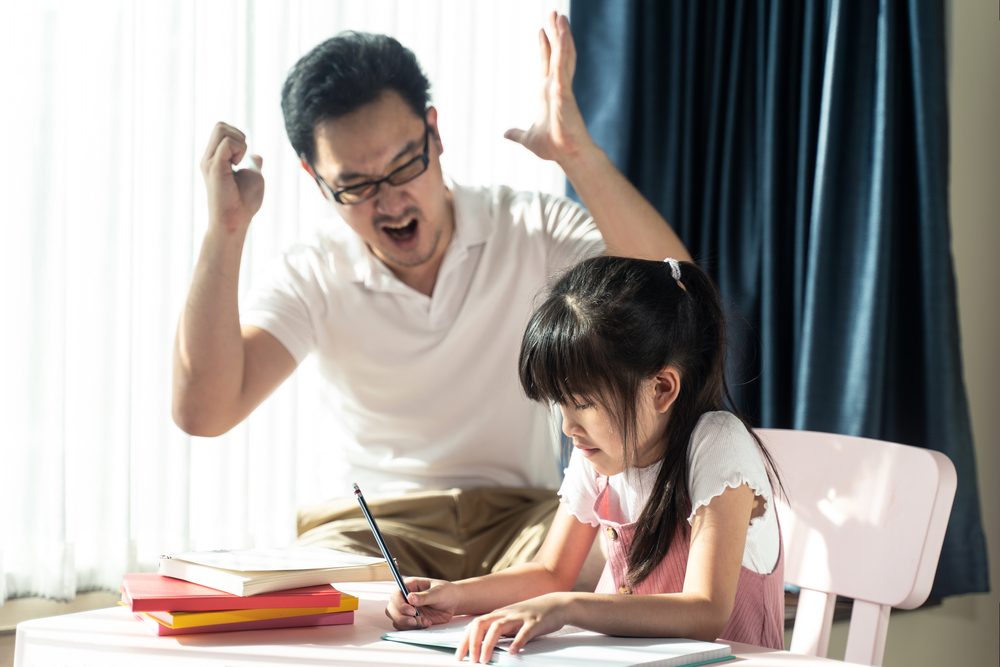
Many times, parents get angry because their children don’t follow the rules or challenge some bottom line. For example, if a parent doesn’t want a child to touch something, the parent will just say, “Hey! Don’t touch it!” and “No!” and “Stop”, the child will hear many of these “No! and “No! In fact, this will often make children feel that they have done something wrong, which in turn will undermine their confidence and make them avoid doing things in the future.

As a parent, what can you do to make your child follow the rules without undermining his self-confidence? What kind of talking skills can parents use?

For example, if a child is angry and his face is red, we can use the following “three-step” approach.

Say How He Feels

“Mommy and Daddy see how angry you are ……”

“Look at your red face. ……”

Parents can try to help their children say how they feel. This is the first and most important step.

Setting boundaries

When a child has a temper tantrum and may hit someone, parents should immediately set a line: “Okay, we can’t hurt others. Help him to set a compliance line.

Arranging a platform for diversion

If the child has already hit someone, the parent should arrange a platform for the child to channel the anger.

For example, the parent can say, “Oh! I see you are so angry that your face is red and you want to hit someone! Why don’t you show Daddy how angry you are? “Why don’t you hit this shark doll?”

Maybe the child will say, “Yes, okay! and then hit the shark doll. At this point, the parent should tell the child, “Oh, Daddy is really angry to see you.

By allowing the child to express his or her emotions, the child will understand that when he or she has negative emotions, they won’t be accepted by the parents.

If parents use the above three steps, not only will they accept their children’s negative emotions, but they will also not condone their misbehavior, and most importantly, children will learn to follow the rules.

Written by: Family Dynamics Counseling Psychologist  Shelly Mok


Fai is a boy who is very good at drawing. He likes to draw his own comic characters, but all his characters do not have eyes, ears, mouth and nose. All of his characters, male or female, with long or short hair, have thick hair covering their ears and foreheads. These characters are like a mirror, reflecting his inner world. He does not want to communicate with others in depth, but just wants to do what he likes quietly.

When I first invited him to introduce his comic book protagonists, he said that his characters do not have mouths because no matter what they say, no one will listen to them, so they do not speak; they do not have eyes because they do not want to see what is happening in the world; they do not have ears because no one will listen to what he says. Even the sound of the crowd annoys him, so he prefers to be alone. Other than these few words, he did not respond to any other questions I had.

It was heartbreaking to listen to this P5 boy and look at his big eyes. At such a young age, he already had to close his heart and give up the opportunity to build positive relationships with others.

When Fai was in Primary 4, he was determined to have dyslexia. His parents brought him to see me not for any training, but to deal with the tension and low self-image that had accumulated between him and his parents for quite some time. From the first grade, he faced many academic challenges, such as often failing in dictation, not finishing his homework until 11:00 p.m. every night, not listening to his parents’ instructions, and not finishing his exam papers. The family and he had a lot of friction and conflict over the grade. He was labeled as lazy, irresponsible and inattentive. Even though his parents later learned that he had dyslexia, it was hard for them to let go of their expectations of him, especially his mother.

In fact, Fai is not lazy. When I observed the way he played the game and did the beauty work in the game room, I knew that he is a person who has great demands on himself. In the face of failure, he would try again and again until he was satisfied. For a child who has been frustrated in his studies, even in a non-academic field, it takes extraordinary inner resources to persist in trying without fear of difficulties and learning from his own failures. As a bystander, I can clearly see his strengths, and I am inspired by his inner strength.

However, the parents’ feelings about Fai’s situation were very complicated. They were so stressed out by their constant worries, sadness, expectations, and disappointments that it was hard for them to see and hear Fai’s efforts and heartfelt voices, so it is no wonder that the protagonists of Fai’s comics live in a world without eyes, ears, mouth, and nose. However, the guilt and helplessness of Fai’s parents also prompted them to ask me for help. As parents, they really need time and space to face their own pain and accept that their children are different from others. Not to mention, they only have one child, Fai.

In the process of working with Fai, I also made several appointments with his parents to help them understand more about the challenges and inner world that Fai was facing, and to help them transition and accept his complex emotions. Later, Fai’s mother told me that Fai was actually very hardworking and struggled with his homework for so long every night because he did not want to give up and insisted on finishing all his homework. Even though his parents told him to forget about it, he insisted on not going to sleep. Therefore, I also said that they were really lucky that Fai did not give up in the face of huge learning difficulties. His mother was stunned after hearing this – it seems that they are starting to see and hear Ah Fai.

Parenting can be the most challenging and unpredictable experience in the world, but it can also be the most satisfying and meaningful thing in life. Parents of children with special needs are faced with extraordinary stress and emotional complexity. These emotions are like a thick fog that prevents parents from seeing and hearing the inner world of their children. At the same time, they cannot see or hear their own inner world, thus isolating the communication between parents and children. As a counseling psychologist, an important part of my job is to help parents clear the clouds so that they can see the moon.

Written by: Pang Chi Wah, Registered Educational Psychologist, New Horizon Development Centre

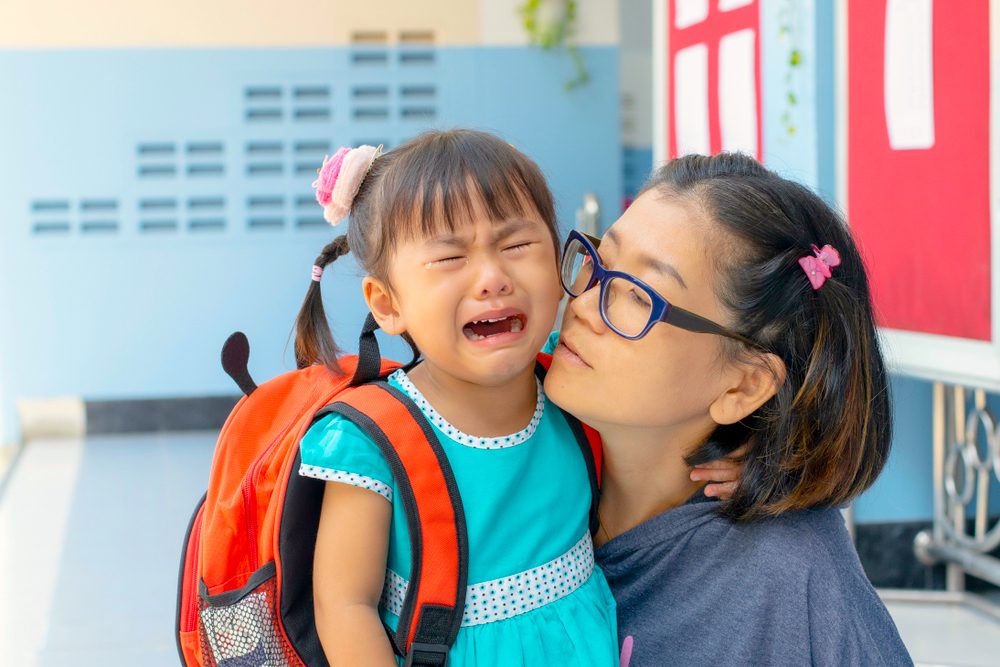
During the school season, we always hear sad cries at the entrance of the school, and it is always a headache for parents when children do not want to go to school alone without their parents. Because newborns lack the ability to protect themselves, survive and feed themselves, they must rely on their parents in their daily lives. This is not only true for humans, but also for babies of other mammals, such as dogs, lions, and dolphins, who must rely on their parents for survival.

As they grow older, some children are able to live more independently and gradually become independent of their parents, while others progress more slowly. For example, some three- and four-year-olds are not allowed to leave their eyesight even though their parents are still at home; some cannot go to playgroups or extracurricular activities by themselves, or they will scream and cry. In some cases, even if the mother is outside, the child refuses to go to the toilet alone.

Why do children rely on their parents?

Why do children become dependent? It may be because the child is not physically
active enough to take care of himself/herself, or it may be due to psychological factors, they are afraid or they are used to relying on their parents. In fact, parents can gradually train their children to be independent, mentally and habitually, so that they can reduce their over-dependence.

Increase the strength of using eating utensils

When children eat, they are passively fed by parents at first, then parents can hold their children’s hands to feed them so that they need to move their arms. Then gradually change the grasping part to the wrist, forearm, and elbow, so that the child needs to gradually increase the strength of using the eating utensil.

Increase parental time away from the child and walking time

When children are accompanied by their parents at home, one of the parents can try to leave the child’s sight for a short period of time, and after the child gets used to it, both parents can leave together and let the child be taken care of by others. At the sametime, parents can also increase the time of leaving according to the child’s progress.

When going out, parents can gradually reduce the time of holding the baby and ask them to try to walk home by themselves. Instead of carrying the baby all the way home, gradually change to carrying the baby to land at the door of the house, landing in front of the elevator, landing in the ground floor lobby, and landing after returning to the estate, gradually increasing the time for the baby to walk.

Inertia dependence of children is caused by parents

In fact, some children’s habitual dependence is caused by parents who take care of their children too much, give them too much, or give them too much help in the process of growth. Some parents think that their children are weak and cannot do anything well,  so they do most of the work for them in order not to mess things up, and some parents even feel successful because their children are caring and dependent on them. If the situation continues, it will have many negative effects on the child in the future.

One day, children will be independent of their parents and need to take care of themselves, so parents should let go of their children appropriately in order to let them grow up. There are many books about the growth of children and objective guidelines for appropriate behavior at each age for parents’ reference.